

In 2026, deciding whether to repair or replace a device is no longer a simple choice. Smartphones, laptops, tablets, gaming consoles, and wearables are more powerful—and more expensive—than ever. At the same time, supply-chain shifts, sustainability concerns, and right-to-repair laws are reshaping how Australians think about technology ownership.
Replacing a device might feel like the easiest option, but in many cases, repairing is the smarter, more economical, and more sustainable choice. Still, there are times when replacement makes sense.
This guide helps tech users make confident, informed decisions about when to repair and when to replace in 2026—without overspending or compromising performance.
Why This Decision Matters More in 2026
Several trends are influencing repair vs replacement decisions:
-
Rising prices for new devices due to chip shortages
-
Longer official software support lifecycles
-
Increased repairability in modular and foldable designs
-
Environmental pressure to reduce e-waste
-
Improved diagnostics and component-level repair options
As a result, the “just buy a new one” mindset is fading. Smart decision-making now means evaluating cost, lifespan, performance, and sustainability together.
When Repairing Your Device Is the Smart Choice
1. The Device Is Less Than 4–5 Years Old
Most modern devices are designed to last longer than users think. If your device is under five years old and still receiving security updates, repair is often worthwhile.
Common fixable issues include:
-
Battery degradation
-
Cracked screens
-
Charging port failures
-
Keyboard or trackpad faults
-
Overheating due to dust or thermal paste
These repairs typically cost far less than replacing the entire device.
2. Performance Issues Are Hardware-Related
Slowness doesn’t always mean your device is outdated.
Often, performance drops are caused by:
-
Worn batteries
-
Nearly full storage
-
Failing SSDs
-
Overheating CPUs
Replacing a battery or upgrading storage can restore performance dramatically—sometimes making a device feel brand new.
3. Repair Costs Are Under 40–50% of Replacement Cost
A good rule of thumb in 2026:
If repair costs are under half the price of a comparable new device, repair is usually the better choice.
Professional diagnostics can clarify whether a repair will meaningfully extend lifespan.
4. Data, Setup & Workflow Matter
Replacing a device isn’t just about cost—it’s also about time.
New devices require:
-
Data migration
-
App reinstallation
-
Software configuration
-
Learning new interfaces
For work or study devices, repairing preserves familiarity and avoids downtime.
5. You Want the Eco-Friendly Option
Repairing reduces:
-
E-waste
-
Carbon emissions
-
Demand for rare earth materials
In 2026, sustainable tech ownership isn’t just ethical—it’s practical.
When Replacing Your Device Makes More Sense
1. The Device Is No Longer Supported
If your device no longer receives:
-
Security updates
-
OS compatibility
-
App support
…it may pose security risks and compatibility issues. At this point, replacement may be safer.

2. Repeated Major Failures
Frequent breakdowns indicate deeper problems.
Warning signs include:
-
Multiple motherboard issues
-
Repeated overheating after repair
-
Unstable power delivery
-
Persistent firmware corruption
When reliability becomes unpredictable, replacement is often more cost-effective.
3. Repair Costs Exceed Device Value
If repair costs exceed 50–60% of the price of a new device—or if multiple expensive repairs are required—replacement may be the smarter investment.
4. Hardware Can’t Meet Your Needs
If your device can’t handle:
-
Required software
-
Workloads (editing, gaming, AI tasks)
-
Connectivity standards (Wi-Fi 6E, Thunderbolt, 5G)
…even after upgrades, replacement may be justified.
5. Structural Damage Is Severe
Serious issues like:
-
Liquid damage affecting multiple components
-
Bent frames
-
Extensive corrosion
…can compromise long-term reliability, even after repair.
The Hidden Costs of Replacement
Many users overlook these factors:
-
Data transfer risks
-
Subscription and software re-purchases
-
Learning curves
-
Environmental impact
Repair often avoids these hidden costs.
How Professional Diagnostics Change the Decision
Guesswork leads to poor decisions.
At Smart Electronix, diagnostics evaluate:
-
Battery health
-
Storage condition
-
Thermal performance
-
Firmware stability
-
Component lifespan
This allows customers to decide based on facts, not assumptions.
The 2026 Repair-First Mindset
With improved repair tools, OEM parts access, and consumer protections, repairing first is now the smarter default.
Many devices can gain:
-
2–4 additional years of use
-
Improved performance
-
Higher resale value
…with the right repair strategy.
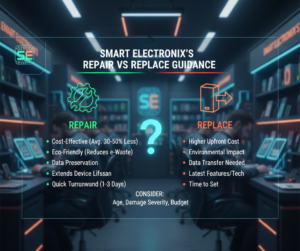
Smart Electronix’s Repair vs Replace Guidance
We help customers decide honestly—without pushing unnecessary repairs or replacements.
Our approach includes:
-
Transparent diagnostics
-
Clear cost comparisons
-
Honest lifespan estimates
-
Upgrade recommendations
-
Eco-conscious repair options
If replacement is the better choice, we’ll say so.
Quick Decision Checklist
Ask yourself:
-
Is the device under 5 years old?
-
Is it still receiving updates?
-
Is repair under 50% of replacement cost?
-
Does repair restore reliable performance?
-
Do I want a sustainable option?
If most answers are yes, repair is likely the right choice.
Final Thoughts
In 2026, smart tech ownership isn’t about replacing devices quickly—it’s about making informed, balanced decisions. Repairing often saves money, reduces waste, and preserves performance. Replacing makes sense when security, reliability, or capability can’t be restored.
The key is knowing the difference—and choosing a repair partner you trust.
Smart Electronix is here to help Australians make smarter repair-vs-replace decisions, backed by expertise, transparency, and sustainability.