
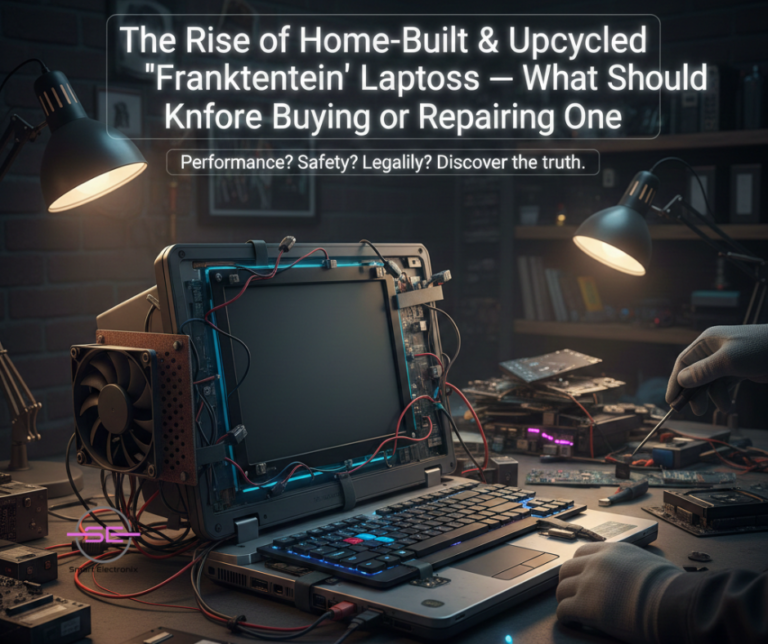
In 2026, a new trend is quietly reshaping the laptop market in Australia: home-built, refurbished, and upcycled laptops, often nicknamed “Frankenstein laptops.” These devices are assembled using parts from multiple machines—different brands, generations, or hardware configurations—to create a functional, budget-friendly system.
Driven by rising device costs, sustainability concerns, and the Right to Repair movement, Frankenstein laptops are becoming increasingly popular among students, freelancers, gamers, and environmentally conscious users. But while they can be powerful and affordable, they also come with unique risks—especially when it comes to repairs.
At Smart Electronix, we regularly diagnose and service these unconventional devices. This guide explains what Frankenstein laptops are, why they’re growing in popularity, and what you should know before buying or repairing one.
What Is a “Frankenstein” Laptop?
A Frankenstein laptop is not a specific brand—it’s a custom-assembled or heavily modified device built using:
-
A laptop chassis from one brand
-
A motherboard from another compatible model
-
Mixed RAM modules
-
Upgraded SSDs
-
Aftermarket batteries
-
Salvaged displays or keyboards
Some are assembled by hobbyists, others by refurbishers, and some by small resellers aiming to extend device lifespan and reduce e-waste.
Why Frankenstein Laptops Are Rising in 2026
1. Rising Prices of New Devices
New laptops—especially premium and AI-powered models—have become significantly more expensive due to:
-
Chip shortages
-
Supply chain disruptions
-
AI accelerators
-
Advanced displays
Upcycled laptops offer a cost-effective alternative.

2. Sustainability & E-Waste Reduction
Reusing functional components:
-
Reduces landfill waste
-
Saves rare materials like lithium and cobalt
-
Extends the lifecycle of electronics
Many Australians now prefer refurbished or rebuilt devices for environmental reasons.
3. Custom Performance at Lower Cost
Users can build laptops optimized for:
-
Coding
-
Office work
-
Media editing
-
Light gaming
For example, combining:
-
An older ThinkPad chassis
-
A newer SSD
-
High-capacity RAM
…can deliver solid performance without buying new.
Common Types of Frankenstein Laptops
🔧 Mixed-Generation Builds
Same brand, different generations (e.g., Lenovo T480 body with T490 motherboard).
🔧 Hybrid Brand Builds
Different brands with compatible components (more risky).
🔧 Upgraded Refurbs
Original laptop with major upgrades (SSD, RAM, battery, display).
🔧 DIY Project Laptops
Built by hobbyists using donor parts.
The Hidden Repair Challenges
While Frankenstein laptops can be practical, they are much harder to repair than standard models.
1. Compatibility Issues
Not all parts communicate perfectly:
-
BIOS mismatches
-
Power delivery conflicts
-
Thermal management failures
-
Fan speed errors
A device may work initially, then develop random shutdowns or overheating.
2. BIOS & Firmware Conflicts
Firmware is often locked to:
-
Original motherboard
-
Original display
-
Original battery controller
This can cause:
-
Boot loops
-
Disabled features
-
Battery misreporting
-
Fan errors
Updating firmware on Frankenstein laptops is high risk.
3. Thermal Management Problems
Cooling systems are designed for specific CPUs and GPUs.
Mismatch issues include:
-
Overheating under load
-
Thermal throttling
-
Fan running constantly
-
Premature component failure
Smart Electronix often sees Frankenstein laptops fail due to poor thermal alignment.
4. Power & Battery Risks
Aftermarket or mismatched batteries can:
-
Drain quickly
-
Fail to charge properly
-
Overheat
-
Damage the motherboard
Battery compatibility is one of the most common failure points.
5. Repair Documentation Is Limited
Unlike OEM laptops:
-
No official service manuals
-
No standardized part numbers
-
No guaranteed spare availability
Technicians must rely on experience, testing, and custom solutions.
What to Check Before Buying a Frankenstein Laptop
If you’re considering purchasing one, always ask:
✅ What parts are original?
✅ Has the BIOS been modified?
✅ Are replacement batteries available?
✅ Does the cooling system match the CPU?
✅ Is the seller offering any repair support?
✅ Has the device been stress-tested?
Avoid devices with unknown firmware modifications or no clear build documentation.
Can Frankenstein Laptops Be Repaired?
Yes—but only by experienced technicians.
At Smart Electronix, we use:
-
Component-level diagnostics
-
Thermal profiling
-
BIOS compatibility checks
-
Power rail analysis
-
Stress and load testing
Repairs are possible, but they require more time and expertise than standard laptops.
When Frankenstein Laptops Make Sense
✔ Budget-conscious users
✔ Students
✔ Developers
✔ Office and productivity users
✔ Environmentally focused buyers
When They Don’t
✖ Mission-critical business systems
✖ Gaming laptops with high GPU load
✖ Users needing official warranties
✖ Users expecting easy future repairs
Smart Electronix Expert Advice
If you already own or plan to buy a Frankenstein laptop:
-
Always back up data regularly
-
Avoid unnecessary firmware updates
-
Monitor temperatures closely
-
Replace batteries with verified-compatible units
-
Use professional diagnostics before upgrades
We also recommend pre-purchase inspections for rebuilt laptops—saving you from costly surprises later.
Final Thoughts
Frankenstein laptops represent the future of sustainable, cost-effective computing, but they come with trade-offs. While they reduce e-waste and offer great value, they require informed ownership and expert repair support.
With the right care—and the right technicians—these hybrid machines can deliver years of reliable performance.
At Smart Electronix, we embrace innovation and responsibility—helping Australians repair, refurbish, and rethink how technology should last longer.