
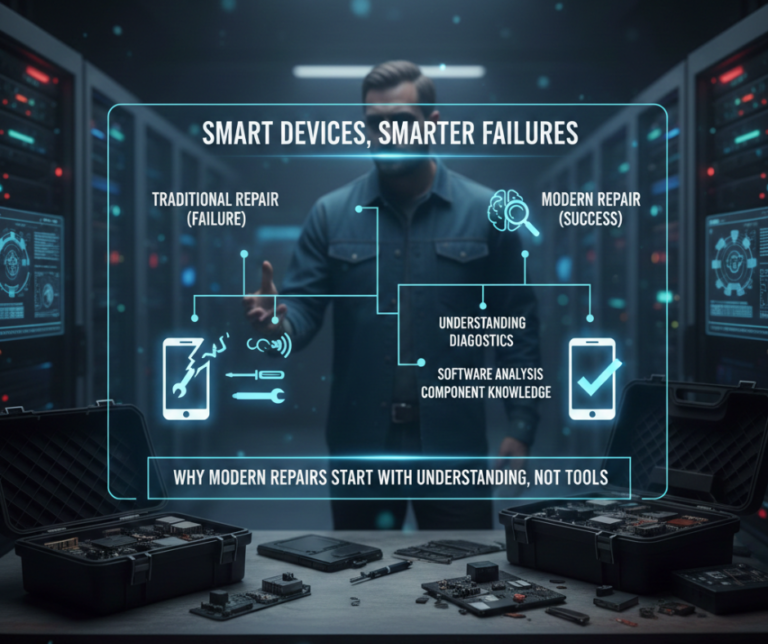
Technology in 2026 is smarter, faster, and more interconnected than ever before. Smartphones think ahead using AI, laptops manage performance dynamically, and everyday devices communicate constantly through cloud services, edge computing, and high-speed networks. But with this intelligence comes a new reality: device failures are no longer simple or obvious.
Gone are the days when a cracked screen or dead battery told the whole story. Today’s repairs demand understanding systems, software behaviour, and digital dependencies—not just replacing parts. This shift is redefining how repairs are approached and why diagnostics matter more than tools.
The Evolution of Device Failures
Traditional device failures were mostly physical:
-
Broken displays
-
Loose charging ports
-
Worn-out batteries
In contrast, modern devices experience “smart failures”, where symptoms don’t clearly point to a single cause. A slow laptop may not have a failing SSD. A phone overheating may not have a bad battery. A smartwatch disconnecting may not be broken at all.
Instead, problems often stem from:
-
Background AI processes
-
Firmware conflicts
-
Network handoff errors
-
Power optimisation misbehaviour
-
Sensor calibration drift
This complexity makes guesswork expensive and ineffective.
Why Repairs Now Start with Understanding
Modern repair success depends on context, not just components.
A professional technician today must understand:
-
How software manages hardware
-
How connectivity affects power usage
-
How updates alter device behaviour
-
How multiple devices interact within one ecosystem
Replacing parts without understanding the system often results in:
-
Repeat failures
-
Wasted money
-
Data loss
-
Shortened device lifespan
Understanding the why behind the problem is now the most valuable repair skill.
The Hidden Role of Software in “Hardware” Problems
Many hardware complaints are actually software-driven:
Battery Issues
What users see:
✔ Fast battery drain
✔ Random shutdowns
What’s often happening:
-
AI background tasks running constantly
-
Connectivity searching for weak signals
-
Firmware misreporting battery health
Replacing the battery may not fix the issue.
Performance Slowdowns
What users see:
✔ Lag
✔ Freezing
✔ Overheating
Possible causes:
-
Thermal throttling algorithms
-
Corrupted system updates
-
Memory management conflicts
The hardware may be perfectly fine.
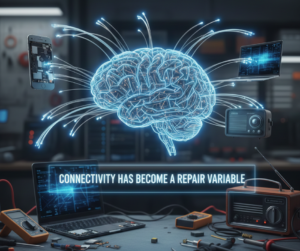
Connectivity Has Become a Repair Variable
Devices in 2026 rarely operate alone. Smartphones connect to:
-
Smartwatches
-
Cars
-
Earbuds
-
Laptops
-
Home IoT systems
A fault in one connection can appear as a failure in another device. For example:
-
Bluetooth instability can drain batteries
-
Cloud sync loops can overload processors
-
Network conflicts can cause app crashes
Modern repairs must consider the full device ecosystem.
Why Guess-and-Replace Repairs No Longer Work
Replacing parts without diagnostics can:
-
Introduce new faults
-
Void warranties
-
Increase repair costs
-
Cause data corruption
This is especially risky with:
-
Foldable devices
-
Modular smartphones
-
Ultra-thin laptops
-
Devices with biometric security
Precision matters more than speed.
The Rise of Diagnostic-First Repair Services
Professional repair services now prioritise:
-
Software integrity checks
-
Firmware analysis
-
Power and thermal monitoring
-
Connectivity testing
-
Usage pattern evaluation
Only after diagnostics confirm the cause does physical repair begin.
This approach:
✔ Saves money
✔ Reduces downtime
✔ Protects user data
✔ Prevents unnecessary part replacement
What This Means for Consumers
As a tech user in 2026, smart decisions matter more than ever.
Before booking a repair, ask:
-
Was the device properly diagnosed?
-
Were software causes ruled out?
-
Is part replacement truly necessary?
-
Will data be protected during repair?
A trustworthy repair service explains the problem—not just the price.
DIY Repairs vs Smart Maintenance
DIY maintenance still has value:
✔ Cleaning ports
✔ Monitoring battery health
✔ Managing storage
✔ Keeping software updated
But advanced repairs—especially involving firmware, connectivity, or sensors—require professional tools and experience.
Knowing when not to DIY is part of being a smart device owner.
How Smart Electronix Approaches Modern Repairs
At Smart Electronix, repairs begin with understanding:
-
How the device behaves
-
What changed before the issue started
-
How software, hardware, and connectivity interact
This diagnostic-first philosophy ensures:
-
Honest repair recommendations
-
Lower long-term costs
-
Longer device lifespan
-
Reduced electronic waste
Repairs are done only when necessary—and done right the first time.
The Future of Repairs Is Preventive, Not Reactive
The repair industry is moving toward:
-
Predictive diagnostics
-
Preventive maintenance
-
Software-driven troubleshooting
-
Eco-conscious repair decisions
Devices will continue to evolve—but the smartest repairs will always start with knowledge, not tools.
Final Thoughts
In 2026, devices don’t just fail—they misbehave, miscommunicate, and miscalculate. Fixing them requires understanding how modern technology works as a system.
Whether you’re dealing with a smartphone, laptop, wearable, or smart home device, the best repair decision starts with asking the right questions—not replacing parts blindly.
Smart devices need smart repairs. And smart repairs start with understanding.