
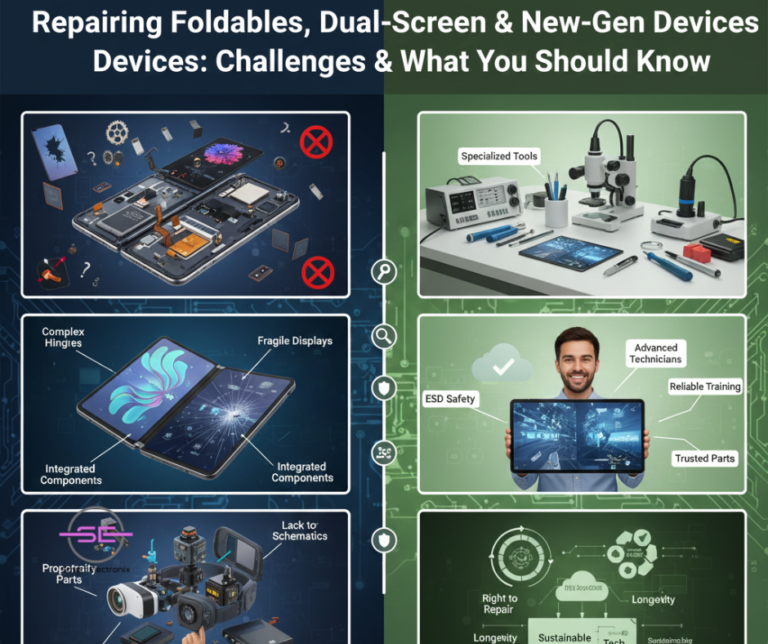
The device repair industry is evolving faster than ever. In 2026, smartphones and laptops are no longer just flat slabs of glass and metal. Foldable phones, dual-screen devices, rollable displays, and hybrid form factors are redefining how devices are designed — and how they must be repaired.
While these innovations deliver exciting user experiences, they also introduce entirely new repair challenges for technicians and consumers alike. Understanding these challenges helps users make better repair decisions and highlights why choosing an experienced repair provider like Smart Electronix is more important than ever.
The Rise of New-Gen Devices
Foldable and dual-screen devices are becoming mainstream thanks to brands like Samsung, Google, Motorola, OPPO, Microsoft, and Lenovo. These devices offer:
-
Flexible OLED displays
-
Advanced hinge mechanisms
-
Dual operating modes (phone + tablet)
-
Multi-screen productivity
-
Compact designs with complex internals
However, innovation comes at a cost — repair complexity has increased significantly.
1. Flexible Displays Are Extremely Fragile
Unlike traditional glass screens, foldable devices use ultra-thin glass (UTG) layered with flexible OLED panels and polymer coatings.
Why this is a repair challenge
-
UTG cracks differently than normal glass
-
Flexible OLEDs crease permanently if mishandled
-
Dust contamination can ruin the display
-
Even slight pressure during repair can cause dead pixels
Screen replacements require:
-
Dust-free environments
-
Precision alignment tools
-
OEM-grade adhesives
-
Controlled pressure bonding
This makes foldable display repairs far more delicate and expensive than standard phone screens.

2. Hinge Mechanisms Are Mechanical Nightmares
The hinge is the heart of any foldable or dual-screen device. Modern hinges contain:
-
Micro gears
-
Springs
-
Rollers
-
Carbon fiber frames
-
Tension plates
Common hinge-related issues
-
Stiff or uneven folding
-
Clicking or grinding sounds
-
Screen misalignment
-
Flex cable damage near hinge area
Unlike laptop hinges, foldable phone hinges are not designed for easy disassembly. A small mistake can permanently damage the screen or internal cables.
3. Flex Cables Wear Out Faster
New-gen devices rely heavily on flexible ribbon cables that bend every time the device opens or closes.
Over time, this can cause:
-
Display flickering
-
Touch unresponsiveness
-
Partial screen blackout
-
Camera or sensor failures
Replacing flex cables often requires complete teardown of the device, making repairs time-consuming and high-risk.
4. Dual Screens Mean Double the Risk
Dual-screen devices feature:
-
Two independent displays
-
Separate digitizers
-
Additional connectors
-
Extra power management components
This doubles:
-
Potential failure points
-
Diagnostic time
-
Replacement costs
A problem on one screen can affect system behavior across both displays, complicating troubleshooting.
5. Adhesives & Water Resistance Increase Complexity
To maintain slim designs and water resistance, manufacturers use high-strength adhesives and layered seals.
Repair risks include
-
Overheating flexible displays during removal
-
Losing water-resistance protection
-
Damaging internal seals
After repairs, seals must be rebuilt and tested, or future liquid exposure could permanently damage the device.
6. Software Calibration Is Mandatory After Repairs
New-gen devices depend heavily on software calibration after hardware work.
Post-repair calibration may include
-
Hinge angle detection
-
Screen orientation logic
-
Dual-screen gesture recognition
-
Touch sensitivity tuning
-
Color balance matching
Without proper calibration, devices may:
-
Fail to detect folding states
-
Display UI glitches
-
Misalign split-screen apps
Professional diagnostic software is essential — basic tools won’t work.
7. Parts Availability Is Limited
Spare parts for foldables and dual-screen devices are:
-
Expensive
-
Brand-restricted
-
Often region-locked
-
Limited in aftermarket supply
This can cause:
-
Longer repair times
-
Higher repair costs
-
Fewer shops capable of repairs
Experienced repair providers build trusted supplier networks to source safe, compatible parts.
8. Repairs Require Specialised Tools & Training
Repairing new-gen devices requires:
-
Anti-dust repair chambers
-
Controlled heat plates
-
Hinge alignment jigs
-
Micro-soldering stations
-
Precision pressure presses
Technicians must be trained specifically for flexible OLED and hinge systems. Traditional phone repair skills alone are no longer enough.
9. Why Choosing the Right Repair Shop Matters
Not all repair shops are equipped to handle foldables or dual-screen devices safely.
What consumers should look for
-
Proven experience with foldable repairs
-
OEM-grade or certified parts
-
Transparent repair quotes
-
Post-repair testing & calibration
-
Warranty on workmanship
Poor repairs can permanently damage high-value devices — costing more in the long run.
How Smart Electronix Handles New-Gen Device Repairs
At Smart Electronix, we’ve adapted our repair processes to meet the demands of next-generation devices.
Our approach includes
-
Advanced diagnostics before disassembly
-
Clean, dust-controlled repair environments
-
Trained technicians for flexible displays
-
Genuine and high-quality replacement parts
-
Full post-repair calibration
-
Quality assurance testing
Whether it’s a foldable phone, dual-screen laptop, or emerging hybrid device, our goal is to restore performance, durability, and reliability.
What Consumers Should Know Before Repairing New-Gen Devices
-
Repairs are more complex than traditional phones
-
Cheap repairs often mean higher long-term risk
-
Delays may occur due to part availability
-
Proper calibration is essential
-
Experienced technicians matter more than ever
Understanding these realities helps set realistic expectations and prevents costly mistakes.
Final Thoughts
Foldables, dual-screen, and new-generation devices represent the future of consumer technology — but they demand a new standard of repair expertise. As designs become more innovative, repairs must become more precise, specialised, and professional.
For consumers, the key is choosing a repair partner who understands the technology inside and out.
Smart Electronix is proud to be part of this future — keeping advanced devices functional, sustainable, and repairable in a rapidly changing tech world.