
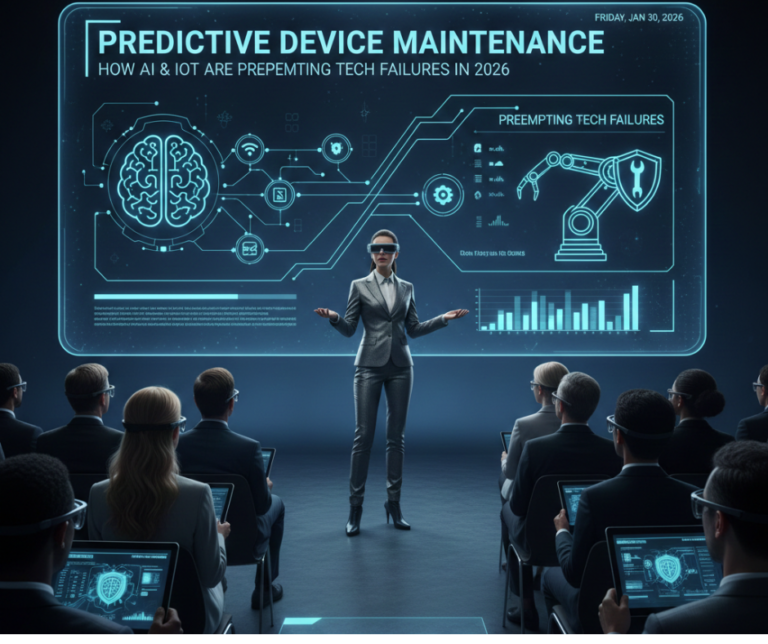
In 2026, the way we think about device repairs is shifting dramatically. Instead of waiting for a smartphone, laptop, or wearable to fail, predictive maintenance powered by AI and IoT is helping devices identify potential issues before they become critical. This approach is transforming repair practices, extending device lifespans, and saving consumers both time and money.
At the heart of this revolution is the ability of devices to monitor their own performance, analyze usage patterns, and alert users or repair professionals about potential problems. Let’s explore how predictive maintenance is changing the repair industry in Australia and what it means for tech users.
What Is Predictive Device Maintenance?
Predictive maintenance involves using real-time data and analytics to anticipate failures. Rather than repairing only after a device breaks, predictive systems:
-
Track hardware performance and wear
-
Monitor software stability and firmware integrity
-
Analyze environmental conditions like temperature and humidity
-
Detect anomalies in connectivity, storage, and battery usage
This proactive approach allows issues to be addressed before they escalate, reducing downtime and repair costs.
How AI Enhances Predictive Maintenance
Artificial intelligence plays a critical role by:
-
Detecting unusual behavior in apps, processors, or sensors
-
Learning typical user patterns to identify deviations
-
Predicting battery degradation, storage issues, and overheating risks
-
Suggesting preventive actions or maintenance schedules
For example, AI can alert a user when a battery is approaching its optimal cycle limit or when a laptop’s thermal management system is being stressed, allowing preventive intervention before failure occurs.
IoT Connectivity: Devices Communicating Problems Early
Modern devices are increasingly interconnected:
-
Smartphones sync with smartwatches and home systems
-
Laptops communicate with cloud services
-
IoT devices share real-time data with each other
IoT allows devices to report anomalies automatically, enabling technicians to act quickly. A failing sensor or peripheral component can trigger a remote alert, sometimes even before the user notices a problem.

Benefits of Predictive Maintenance for Consumers
Adopting predictive maintenance technologies brings multiple advantages:
-
Fewer Emergency Repairs: Early detection prevents sudden breakdowns
-
Lower Costs: Addressing small issues is cheaper than full replacements
-
Longer Device Lifespan: Optimized performance reduces wear on components
-
Data Protection: Preventing failures protects critical information
Predictive maintenance turns devices from reactive tools into smart, self-aware systems.
Impact on Repair Services
For technicians, predictive maintenance is changing the repair landscape:
-
Reduced Guesswork: AI logs and IoT data provide a clear picture of the issue
-
Faster Diagnostics: Problems are identified faster, enabling quicker repairs
-
Targeted Replacements: Only faulty components are repaired, minimizing waste
-
Remote Support: Some maintenance can be handled virtually, reducing the need for physical visits
This approach improves efficiency, accuracy, and customer satisfaction.
Examples of Predictive Maintenance in Action
-
Smartphones: AI alerts users to battery or charging issues before full depletion
-
Laptops: Thermal sensors detect potential overheating before hardware is damaged
-
Smartwatches: Sensor calibration alerts prevent inaccurate readings
-
IoT Devices: Smart home systems report performance degradation for preemptive fixes
Even minor preventive actions can save hundreds of dollars in repairs and replacements over a device’s lifespan.
Challenges and Considerations
While predictive maintenance is transformative, it comes with considerations:
-
Data Privacy: Devices collect performance data, which must be handled securely
-
AI Accuracy: Predictive algorithms need constant updates to remain reliable
-
Device Compatibility: Older models may not support advanced monitoring
-
Professional Oversight: Some predicted issues still require expert intervention
Consumers should combine AI alerts with professional diagnostics for the best results.
Smart Electronix: Leading Predictive Repairs
At Smart Electronix, predictive maintenance is at the forefront of our repair philosophy:
-
We use AI-assisted diagnostics to anticipate potential issues
-
We monitor firmware, sensors, and connectivity for hidden problems
-
Our technicians provide targeted repairs based on data-driven insights
-
We educate consumers on how to leverage predictive alerts for device longevity
This approach ensures that devices are not only repaired efficiently but maintained proactively.

The Future of Repairs Is Predictive
The repair industry in 2026 is evolving from reactive fixes to intelligent, data-driven maintenance. Predictive maintenance allows devices to act as partners in their own care, alerting users and technicians to problems before they escalate.
For consumers, this means fewer surprises, reduced repair costs, and longer-lasting technology. For repair services, it means greater precision, efficiency, and customer trust.
Conclusion
Predictive device maintenance is changing how we think about repairs. AI and IoT technologies are transforming devices from reactive machines into self-monitoring, proactive systems.
In this new era, successful repairs aren’t just about fixing broken parts—they’re about anticipating problems, protecting data, and extending device lifespans. With services like Smart Electronix, Australian consumers can enjoy smarter, safer, and more reliable technology in 2026 and beyond.