

The way devices connect, communicate, and process data has changed dramatically in recent years. By 2026, 5G networks, edge computing, and next-generation connectivity standards have become mainstream across smartphones, laptops, wearables, and IoT devices. While these technologies deliver faster speeds and smarter experiences, they also fundamentally change how devices fail, how issues are diagnosed, and how repairs are performed.
For consumers and repair professionals alike, troubleshooting is no longer just about replacing a broken part—it’s about understanding software, networks, firmware, and real-time data flow. This shift is redefining modern repair practices across Australia.
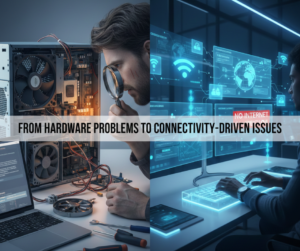
From Hardware Problems to Connectivity-Driven Issues
In the past, most device repairs were straightforward:
-
Broken screens
-
Dead batteries
-
Faulty charging ports
Today, many reported “hardware issues” are actually caused by:
-
Network handoff failures
-
Edge-processing errors
-
Firmware incompatibility with 5G bands
-
Security protocols blocking connectivity
As connectivity becomes more advanced, diagnosis becomes more complex.
How 5G Changes Device Troubleshooting
1. More Radios, More Failure Points
Modern devices support multiple frequency bands, including:
-
Sub-6 GHz
-
mmWave
-
Dynamic spectrum sharing
Each band relies on different antennas, amplifiers, and firmware controls. A device may:
-
Work on Wi-Fi but fail on mobile data
-
Connect to 4G but drop 5G
-
Overheat due to signal amplification
Diagnosing these issues requires signal testing, firmware validation, and antenna inspection, not just part replacement.
2. Heat & Power Issues Linked to Connectivity
5G radios consume more power, especially in weak signal areas. Common symptoms include:
-
Battery drain
-
Overheating
-
Sudden performance throttling
What appears to be a “bad battery” is often a connectivity-related power management problem.
3. Software-Network Dependencies
5G performance depends heavily on:
-
Carrier profiles
-
Firmware updates
-
Regional network configurations
A failed update or incorrect carrier configuration can break connectivity entirely, even when hardware is intact.
Edge Computing: A New Layer of Complexity
What Is Edge Computing?
Edge computing shifts data processing away from central cloud servers and closer to the device—sometimes onto the device itself or nearby network nodes.
This allows:
-
Faster response times
-
Real-time AI processing
-
Reduced latency
But it also means more things can go wrong locally.
How Edge Computing Affects Repairs
With edge processing:
-
Apps rely on local AI models
-
Devices cache more data
-
Sensors constantly communicate
If edge services fail, users may experience:
-
App crashes
-
Camera or voice assistant issues
-
Smart features not responding
These problems often look like hardware faults—but they’re not.
Edge Failures Are Harder to Detect
Unlike cloud issues, edge failures:
-
Don’t always trigger error messages
-
Can affect only specific features
-
May vary by location or network
Repair technicians must now analyze logs, background services, and real-time data flows.
New Connectivity Standards & What They Break
Wi-Fi 6E & Wi-Fi 7
Newer Wi-Fi standards introduce:
-
Wider channels
-
Higher throughput
-
More aggressive power management
Issues seen in 2026:
-
Random disconnects
-
Incompatibility with older routers
-
Driver conflicts after updates
Many users assume faulty Wi-Fi chips, but the real issue is software and compatibility.
USB-C, Thunderbolt & Multi-Role Ports
Modern ports now handle:
-
Power delivery
-
Data transfer
-
Displays
-
Networking
A single port failure may affect:
-
Charging
-
External displays
-
Docking stations
Troubleshooting now requires protocol-level testing, not just visual inspection.
Why Traditional Repair Methods No Longer Work Alone
Replacing parts without understanding connectivity layers can:
-
Fail to fix the issue
-
Create new problems
-
Increase repair costs
Modern troubleshooting requires:
✔ Firmware diagnostics
✔ Network behaviour analysis
✔ Power and thermal monitoring
✔ Compatibility testing
This is why many “quick fixes” don’t work anymore.
How Repair Diagnostics Are Evolving in 2026
1. Software-First Diagnostics
Repair technicians now start with:
-
Firmware integrity checks
-
Network logs
-
Update history
Hardware replacement comes after digital analysis.
2. AI-Assisted Troubleshooting
AI diagnostic tools can:
-
Detect abnormal power usage
-
Identify signal instability
-
Predict component stress
This speeds up diagnosis and reduces unnecessary part swaps.
3. Remote & Live Testing
Some connectivity issues only appear:
-
In specific locations
-
On certain networks
-
Under real-world usage
Remote diagnostics and live testing allow technicians to reproduce issues accurately.
What This Means for Consumers
If your device:
-
Drains battery unusually fast
-
Loses network randomly
-
Overheats during calls or streaming
-
Works fine on Wi-Fi but not mobile data
The issue may not be physical damage. It’s likely tied to connectivity, firmware, or network interaction.
Replacing a battery or screen won’t fix that.
Why Professional Diagnostics Matter More Than Ever
In the era of 5G and edge computing, professional repair services provide:
-
Accurate root-cause diagnosis
-
Lower long-term costs
-
Fewer repeat repairs
-
Better device lifespan
At Smart Electronix, diagnostics focus on the entire device ecosystem—hardware, software, and connectivity—before recommending any repair.
How Smart Electronix Adapts to New Connectivity Challenges
Smart Electronix keeps pace with modern repair demands by:
-
Using advanced diagnostic tools
-
Monitoring power, signal, and thermal behaviour
-
Identifying firmware-network conflicts
-
Repairing only what’s truly faulty
This approach ensures devices aren’t over-repaired or prematurely replaced.
Final Thoughts
5G, edge computing, and new connectivity standards are transforming how devices function—and how they fail. Troubleshooting in 2026 is no longer about spotting broken parts; it’s about understanding how software, networks, and hardware interact in real time.
As devices become smarter and more connected, repairs must become smarter too.
Accurate diagnosis is now the most valuable repair tool of all.