
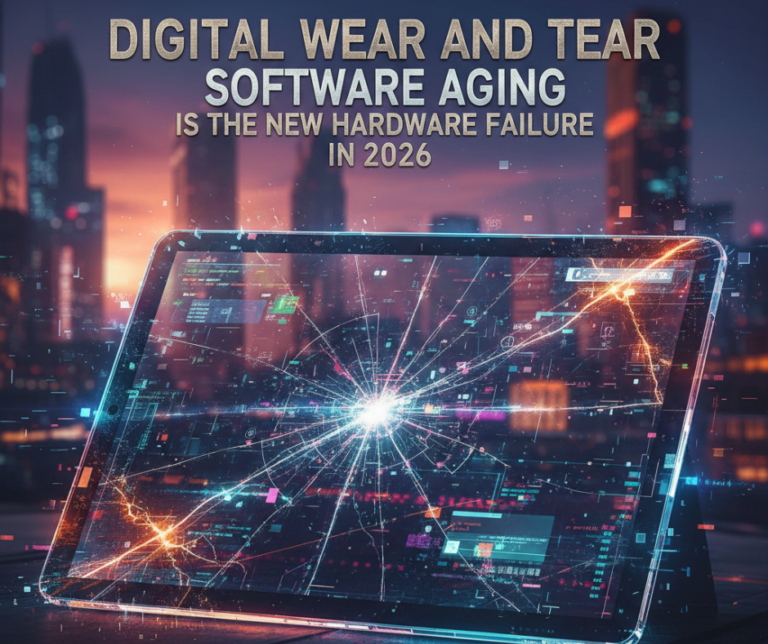
When devices slow down, crash, or behave unpredictably, most people assume the hardware is failing. In 2026, that assumption is often wrong. Increasingly, software aging—also known as digital wear and tear—is becoming the primary reason devices feel “old” long before their hardware actually is.
Unlike physical damage, software aging happens quietly. It accumulates over time, gradually degrading performance, reliability, and efficiency. Understanding this hidden form of wear is now essential for extending device lifespan and avoiding unnecessary replacements.
What Is Software Aging?
Software aging refers to the gradual decline in a system’s performance and stability due to:
-
Accumulated background processes
-
Memory fragmentation
-
Legacy code interacting with new updates
-
Outdated drivers and firmware layers
-
Cached data that never gets cleaned properly
Unlike hardware degradation, software aging doesn’t involve broken parts—it involves systems becoming inefficient over time.
Why Software Ages Faster in Modern Devices
Devices in 2026 are more complex than ever. Smartphones, laptops, and tablets now rely on:
-
AI-driven background services
-
Continuous cloud synchronization
-
Real-time security monitoring
-
Multi-layered firmware
-
Always-on connectivity
Each of these layers adds value—but also contributes to long-term system strain.
The more a device does automatically, the more opportunities there are for inefficiencies to build up.
Common Symptoms of Software Aging
Software aging doesn’t look dramatic—but it’s disruptive:
-
Slower boot times
-
Apps taking longer to open
-
Random system freezes
-
Inconsistent battery life
-
Connectivity dropouts
-
Features behaving unpredictably
These symptoms are often misdiagnosed as:
-
Failing batteries
-
Bad storage drives
-
Defective memory
-
Aging processors
In reality, the hardware may still be perfectly healthy.
Firmware Bloat: When Updates Become a Problem
Firmware updates are essential for security and compatibility—but over time, they can become burdensome.
Firmware bloat occurs when:
-
New features are added without removing old ones
-
Background services increase after each update
-
Older hardware struggles with newer firmware demands
This creates a gap between what the device can physically handle and what the software expects.
Why Factory Resets Don’t Always Work Anymore
In the past, a factory reset could restore performance. In 2026, resets are less effective because:
-
Firmware remains unchanged
-
Cloud backups restore inefficient configurations
-
Background services resume immediately
-
System-level optimizations are locked by manufacturers
A reset may temporarily help—but it rarely solves the root cause.
How Professional Repairs Address Software Aging
Modern repair services treat software aging as a technical issue—not a user inconvenience.
Professional intervention may include:
-
Firmware optimization and rollback
-
Removal of unnecessary system services
-
Power and memory behavior tuning
-
Connectivity stack recalibration
-
Thermal and performance profiling
These steps require specialized tools and experience—not just consumer-level settings.
The Hidden Cost of Ignoring Software Aging
When software aging goes untreated, it leads to:
-
Accelerated battery degradation
-
Increased heat output
-
Reduced storage lifespan
-
Higher risk of firmware corruption
-
Shortened overall device life
Ironically, ignoring software aging often causes real hardware damage over time.
Sustainability and Software Longevity
Replacing devices due to software aging contributes significantly to electronic waste.
Extending usable life through:
-
Firmware optimization
-
Targeted software maintenance
-
Performance recalibration
helps:
-
Reduce e-waste
-
Lower consumer costs
-
Maximize hardware investment
Software maintenance is now a sustainability strategy, not just a performance fix.
How Smart Electronix Tackles Software Aging
At Smart Electronix, software aging is treated as a repair discipline of its own.
Our approach includes:
-
System-level diagnostics
-
Firmware and OS behavior analysis
-
Performance and thermal balancing
-
Data-safe optimization procedures
Instead of defaulting to part replacement, we focus on restoring system efficiency.
The Future: Devices That Age Gracefully
Manufacturers are beginning to recognize software aging as a major issue. The future points toward:
-
Modular firmware updates
-
AI-driven system optimization
-
User-visible performance health metrics
-
Longer official software support
Until then, professional maintenance remains the best defense.
Final Thoughts
In 2026, devices don’t just wear out—they slowly wear down digitally. Software aging is the invisible force behind many modern tech frustrations, quietly undermining performance long before hardware fails.
Understanding this shift allows consumers to:
-
Make smarter repair decisions
-
Avoid unnecessary upgrades
-
Extend device lifespan
-
Reduce environmental impact
Because sometimes, fixing your device isn’t about replacing parts—it’s about restoring balance.