
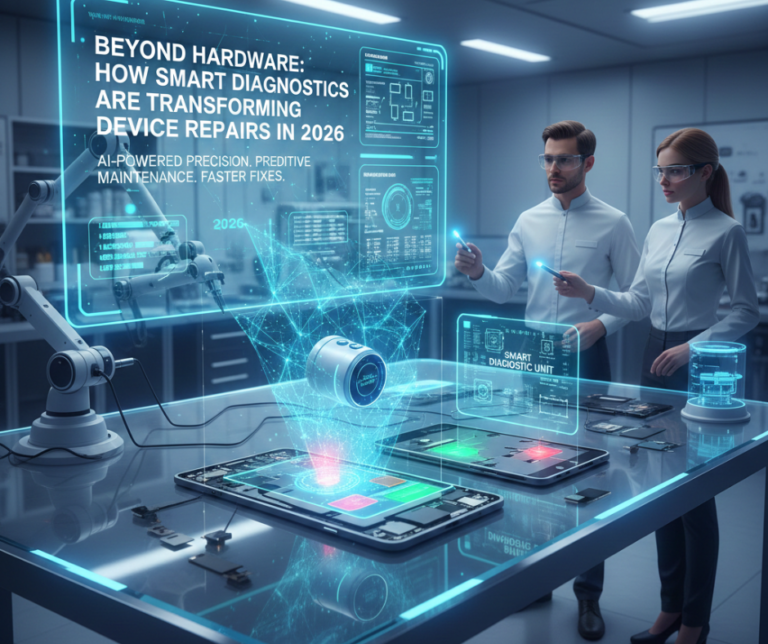
In 2026, the repair landscape is changing faster than ever. Devices aren’t just phones, laptops, or tablets—they’re complex ecosystems powered by AI, 5G connectivity, foldable displays, edge computing, and IoT integration. With such advancements, the old “see a broken part, replace the part” approach is becoming outdated. Today, smart diagnostics are taking center stage, helping technicians identify the root causes of problems before any repair begins.
This shift isn’t just about convenience—it’s about saving time, reducing costs, extending device lifespans, and protecting data. Here’s how modern diagnostics are transforming the repair industry in 2026 and what consumers need to know.
Why Traditional Repairs Are Not Enough
In the past, most repairs were straightforward:
-
Cracked screens
-
Dead batteries
-
Faulty keyboards or ports
While hardware replacement solved many problems, modern devices bring new challenges:
-
AI-driven performance management can mask battery issues
-
Foldable and modular designs add delicate mechanical components
-
5G and Wi-Fi 6/7 connectivity create software-hardware dependencies
-
Firmware updates can cause devices to “brick” without obvious physical damage
This means guessing the problem can lead to unnecessary repairs, extra costs, and even worse damage.
The Role of Smart Diagnostics
Smart diagnostics involve analyzing devices as interconnected systems, combining software, firmware, and hardware checks. This approach enables technicians to pinpoint:
-
Battery degradation vs software misreporting
-
Thermal throttling vs dust-clogged vents
-
Network or firmware conflicts vs faulty antennas
-
Sensor or camera module issues vs software calibration errors
With accurate diagnostics, repairs become more precise and reliable, reducing repeat failures.
Key Features of Modern Diagnostics
1. AI-Assisted Analysis
AI tools now detect subtle patterns:
-
Abnormal battery drain
-
Unexpected thermal spikes
-
Network instability
-
Sensor malfunctions
AI can also predict component failure before it happens, allowing proactive maintenance.
2. Connectivity Monitoring
Devices increasingly rely on 5G, edge computing, and cloud-linked AI. Diagnostics now monitor:
-
Signal strength and quality
-
Firmware interactions with networks
-
Data processing at the device vs edge nodes
This ensures technicians can identify software-hardware conflicts that would have been invisible before.
3. Firmware & Software Verification
Modern devices often fail due to corrupted firmware or update conflicts. Diagnostics now:
-
Check version integrity
-
Test rollback functionality
-
Detect conflicting apps or background processes
This reduces the risk of unnecessary hardware replacements.
4. Thermal & Power Profiling
Overheating isn’t always due to a bad fan. Diagnostics track:
-
CPU and GPU temperatures
-
Battery charge cycles and stress
-
Power usage during normal vs heavy tasks
This helps determine if performance issues are hardware, firmware, or usage-related.
Benefits for Consumers
Using smart diagnostics first offers clear advantages:
-
Cost Savings: Only replace parts that truly need it.
-
Data Protection: Early detection avoids catastrophic failures.
-
Extended Device Lifespan: Accurate maintenance keeps devices running longer.
-
Eco-Friendly Repairs: Less waste from unnecessary part replacements.
In 2026, informed diagnostics are not a luxury—they’re essential for modern device ownership.
What Consumers Can Do
Even if you’re not a technician, you can support smart diagnostics:
-
Keep devices updated with official firmware
-
Avoid uncertified chargers and accessories
-
Monitor battery health and performance
-
Note when and how problems appear (apps, locations, temperature)
-
Consult professional services before attempting risky repairs
Why Smart Electronix Leads in Modern Diagnostics
At Smart Electronix, we combine:
-
Advanced AI-assisted diagnostic tools
-
Network and firmware analysis
-
Hardware inspection and thermal profiling
-
Honest repair recommendations
Our goal is to diagnose first, repair smartly, and avoid unnecessary part replacements, keeping devices running longer and safely.
The Future of Device Repairs
The repair industry in 2026 is no longer just about hardware—it’s about systems thinking, data-driven analysis, and preventative maintenance. As devices become smarter, diagnostics become the most critical step in ensuring cost-effective, safe, and sustainable repairs.
Whether it’s a smartphone, laptop, foldable device, or wearable, the devices of tomorrow demand a smarter approach. Consumers who embrace smart diagnostics today are saving money, reducing e-waste, and enjoying longer-lasting tech.
Conclusion:
Smart diagnostics are transforming device repairs from reactive fixes to proactive, precise solutions. By understanding the full picture—hardware, software, and connectivity—users can enjoy better-performing devices, lower repair costs, and more sustainable technology use.
Smart Electronix is at the forefront of this shift, helping Australians make smarter, safer, and more informed repair decisions in 2026 and beyond.