
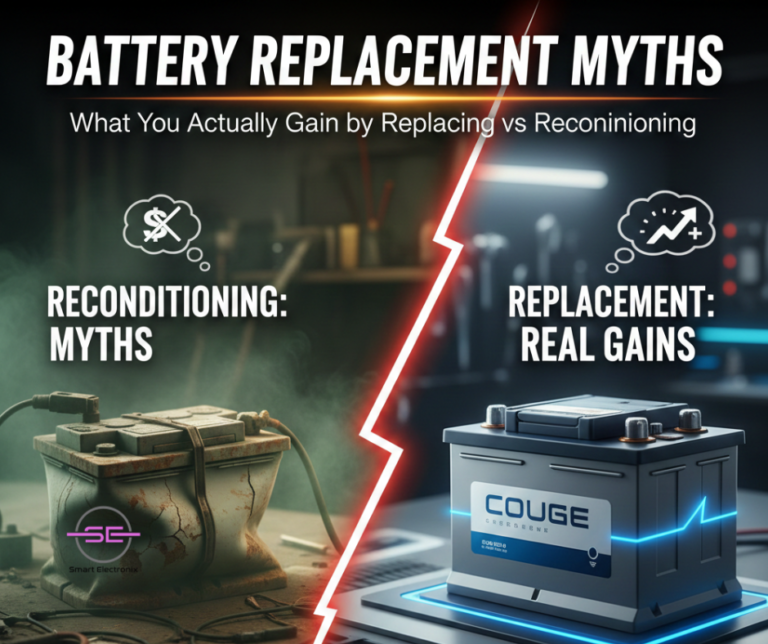
In 2025, battery health remains one of the biggest concerns for smartphone and laptop users in Australia. Whether it’s fast-draining power, random shutdowns, overheating, or slow charging, most device troubles are tied directly to aging lithium-ion batteries. But when it comes to fixing the issue, people are often confused:
Should you replace the battery or try reconditioning it?
With so many myths circulating on social media and DIY forums, it’s important to understand the truth behind both options — and what actually benefits your device in the long run. This guide breaks down the differences and helps you make the right decision.
🔋 Myth #1: Reconditioning Will Make an Old Battery Like New Again
Many users believe that battery reconditioning — a process where charge cycles are reset or the battery is slowly deep-cycled — can magically restore full capacity.
The truth:
Reconditioning only helps in very specific cases, and only by a small margin.
It may restore 5–15% of lost capacity, but it cannot:
-
Rebuild damaged lithium cells
-
Fix swollen batteries
-
Reverse chemical degradation
-
Restore peak performance
Once the battery health drops below 80%, replacement becomes the only reliable solution.
🔋 Myth #2: Replacement Batteries Are Always Risky or Fake
Because of supply-chain disruptions and counterfeit markets, customers worry about replacing their battery.
The truth:
Reputable shops — like Smart Electronix — source OEM or high-grade certified batteries that meet:
-
Australian safety standards
-
Original capacity requirements
-
Proper discharge protection
-
Safe thermal performance
A professional replacement increases safety. Counterfeit batteries are only a risk when using unverified or low-cost repairers.
🔋 Myth #3: A Reconditioned Battery Will Last Just as Long
Even after a “successful” reconditioning, the improvement is temporary.
Why?
Battery aging is chemical. Once lithium compounds break down, no software method can reverse it. Reconditioned batteries often last:
-
2–3 months if moderately worn
-
A few weeks if heavily degraded
A new, high-quality replacement battery lasts:
-
1.5–3 years with normal usage
-
Longer if paired with smart charging habits
🔋 Myth #4: Battery Replacements Damage the Device
Some believe that opening the phone or laptop causes harm.
The truth:
Damage only occurs with:
-
Untrained technicians
-
Poor-quality tools
-
Cheap batteries
-
Incorrect calibration
When done by certified repair professionals, battery replacement is safe, precise, and restores the device to near-original performance.
🆚 Battery Replacement vs. Battery Reconditioning
Here’s a clear comparison so you can decide what’s right for your device:
| Feature | Replacement | Reconditioning |
|---|---|---|
| Restores full capacity | ✅ Yes | ❌ No |
| Safety level | High (OEM parts) | Moderate |
| Useful for swollen batteries | ❌ Never | ❌ Impossible |
| Improvement duration | 1.5–3 years | Weeks to months |
| Cost | Higher | Lower |
| Good for old devices | Yes | Limited |
| Eco-friendly | Depends on recycling | Yes (short-term) |
| Recommended for daily use phones | ✔✔ | ✖ |
🔋 When Reconditioning Does Make Sense
Reconditioning isn’t completely useless — it has its place.
It works best for:
-
Temporary backup devices
-
Very old laptops not worth investing in
-
People who need a short-term fix before upgrading
-
Devices where replacement parts are discontinued
In these cases, reconditioning can extend usability just a little longer.
🔋 When Battery Replacement Is the Best (and Only) Safe Option
You should replace your battery immediately if you notice:
-
Battery swelling or bulging
-
Sudden drops from 30% to 1%
-
Device shutting down during calls or gaming
-
Overheating during charging
-
Charging stuck at a certain percentage
-
Battery health below 80%
-
Extremely slow charging
These signs indicate irreversible chemical degradation, and reconditioning won’t help.
🔋 The Real Benefits of Replacing Your Battery
A high-quality battery replacement restores:
1. Full Battery Life
Your device returns to near-original performance.
2. Faster Charging
New batteries accept charge more efficiently.
3. Better Performance
Old batteries force devices to throttle performance. Replacement removes this bottleneck.
4. Improved Safety
Old lithium cells can leak, expand, or short-circuit.
5. Longer Device Lifespan
A battery replacement can add 2–3 years to your phone or laptop’s usable life.
♻️ What About the Environment?
Many people think reconditioning is always more eco-friendly, but it’s not always the case.
The eco-friendly choice is:
-
Replace the battery
-
Recycle the old one properly
This keeps the device out of landfills and prevents toxic chemical leakage.
✔️ Final Verdict: Replace or Recondition?
Looking at all the evidence:
-
Reconditioning is temporary and helpful only for short-term needs.
-
Replacement is long-lasting, safer, and restores performance.
-
For daily-use smartphones and laptops, replacement is the clear winner.
-
For very old devices, reconditioning may be enough to keep them alive temporarily.
When done properly using certified, high-quality batteries, replacement gives you the best return on investment — and protects your device from future failures.