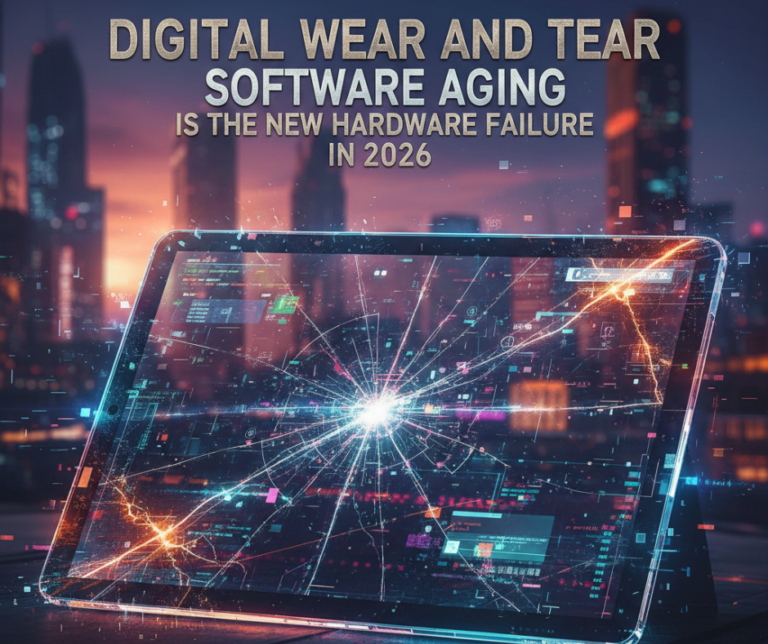
When devices slow down, crash, or behave unpredictably, most people assume the hardware is failing. In 2026, that assumption is often wrong. Increasingly, software aging—also known as digital wear and tear—is becoming the primary reason devices feel “old” long before their hardware actually is. Unlike physical damage, software aging happens quietly. It accumulates over time, […]
Read more
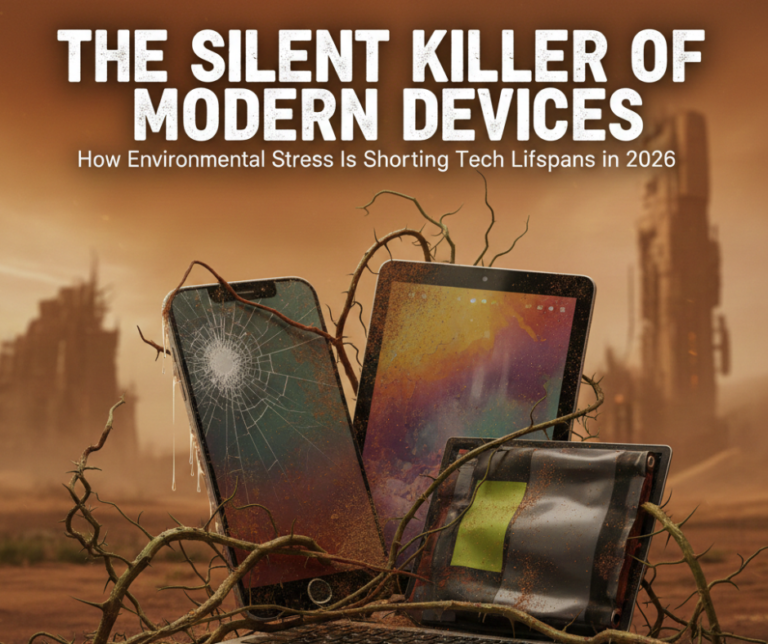
When people think about why their smartphones or laptops fail, they usually blame outdated hardware, bad batteries, or faulty updates. However, in 2026, one of the most overlooked causes of device failure isn’t inside the device at all—it’s the environment around it. Heat, humidity, dust, air quality, and even daily usage locations are silently damaging […]
Read more
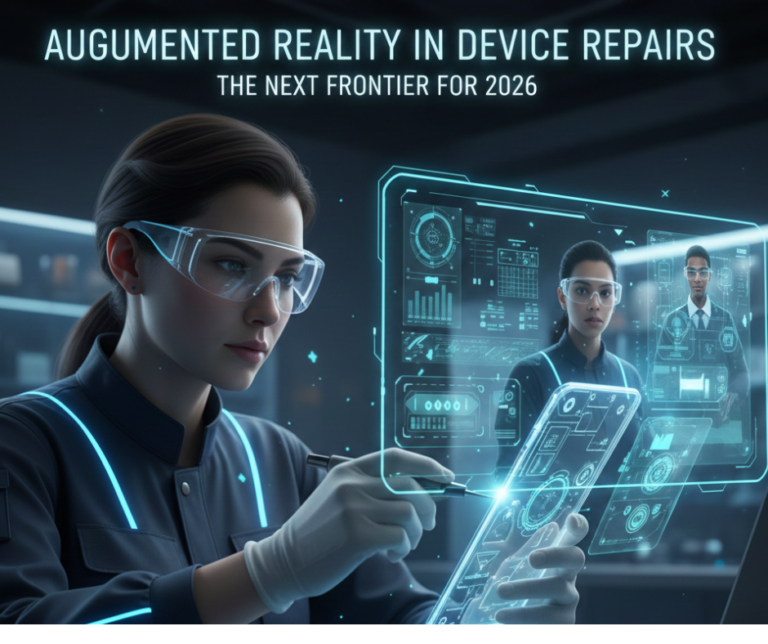
In 2026, repairing consumer electronics is no longer limited to physical tools and technical manuals. Augmented reality (AR) is revolutionizing the repair industry by providing technicians with real-time guidance, remote assistance, and interactive diagnostics. From smartphones and laptops to wearables and smart home devices, AR is helping professionals solve problems faster, more accurately, and with […]
Read more
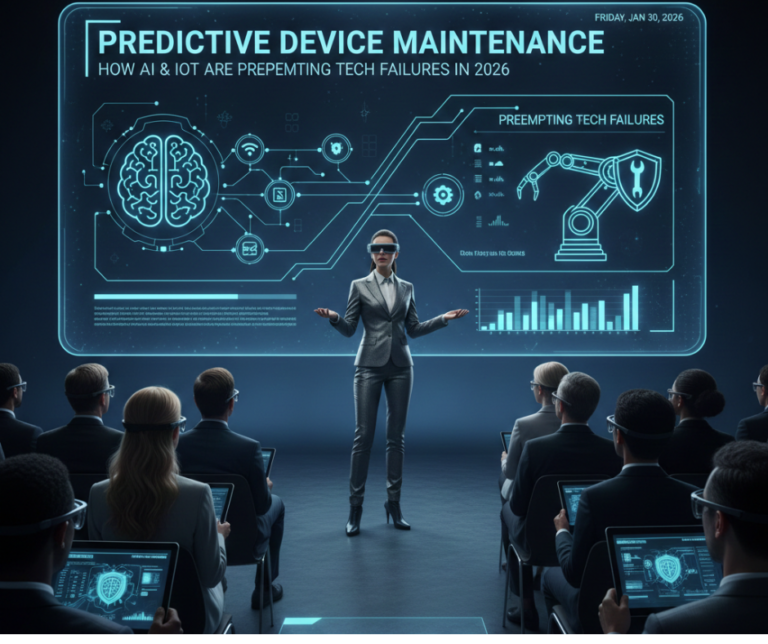
In 2026, the way we think about device repairs is shifting dramatically. Instead of waiting for a smartphone, laptop, or wearable to fail, predictive maintenance powered by AI and IoT is helping devices identify potential issues before they become critical. This approach is transforming repair practices, extending device lifespans, and saving consumers both time and […]
Read more
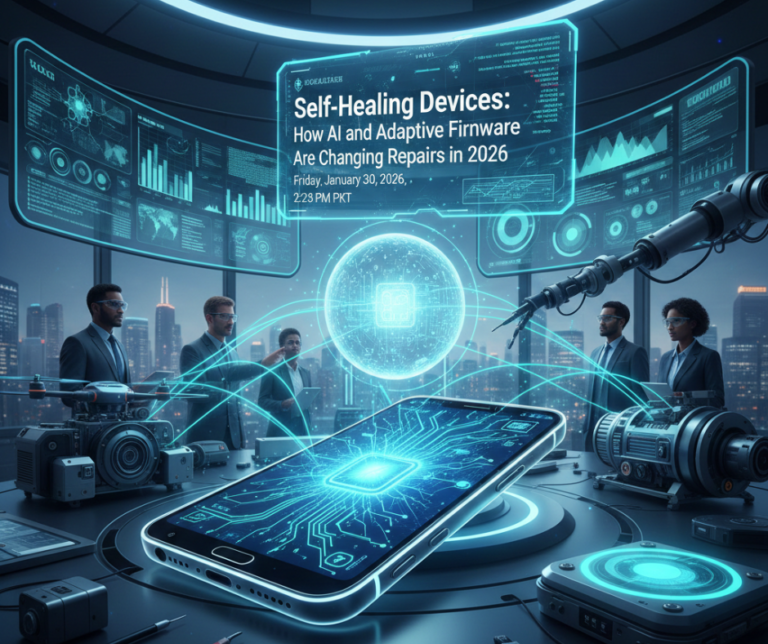
The world of consumer electronics is evolving faster than ever. In 2026, devices are no longer just tools—they’re intelligent systems capable of learning from use, predicting failures, and even repairing themselves. Self-healing devices are emerging as the next frontier, combining AI, adaptive firmware, and modular hardware to reduce downtime and extend lifespans. This transformation is […]
Read more
In 2026, repairing a smartphone or laptop is no longer a simple task of swapping broken parts. Modern devices are smarter, thinner, more connected, and more software-driven than ever before. While these advancements bring powerful features and seamless experiences, they also introduce new layers of complexity when something goes wrong. Today’s device repairs sit at […]
Read more
In 2026, repairing a smartphone or laptop is no longer a simple task of swapping broken parts. Modern devices are smarter, thinner, more connected, and more software-driven than ever before. While these advancements bring powerful features and seamless experiences, they also introduce new layers of complexity when something goes wrong. Today’s device repairs sit at […]
Read more
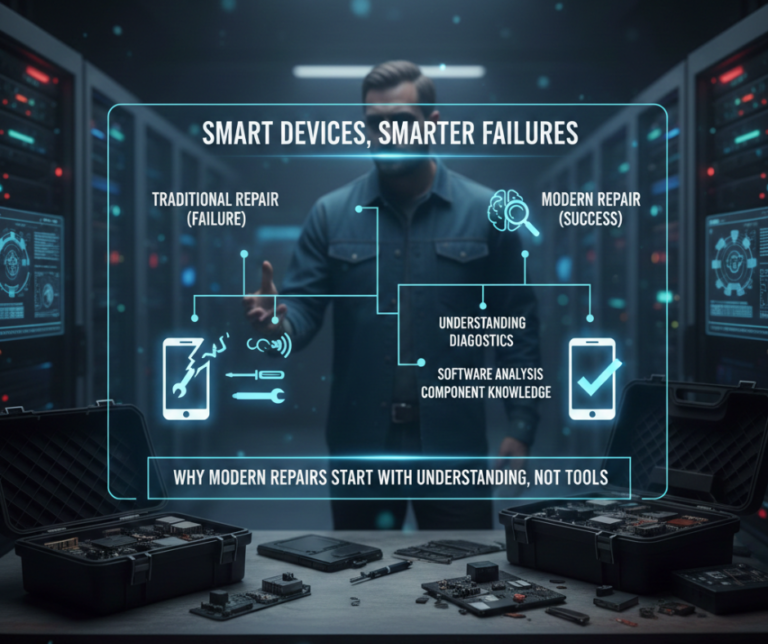
Technology in 2026 is smarter, faster, and more interconnected than ever before. Smartphones think ahead using AI, laptops manage performance dynamically, and everyday devices communicate constantly through cloud services, edge computing, and high-speed networks. But with this intelligence comes a new reality: device failures are no longer simple or obvious. Gone are the days when […]
Read more
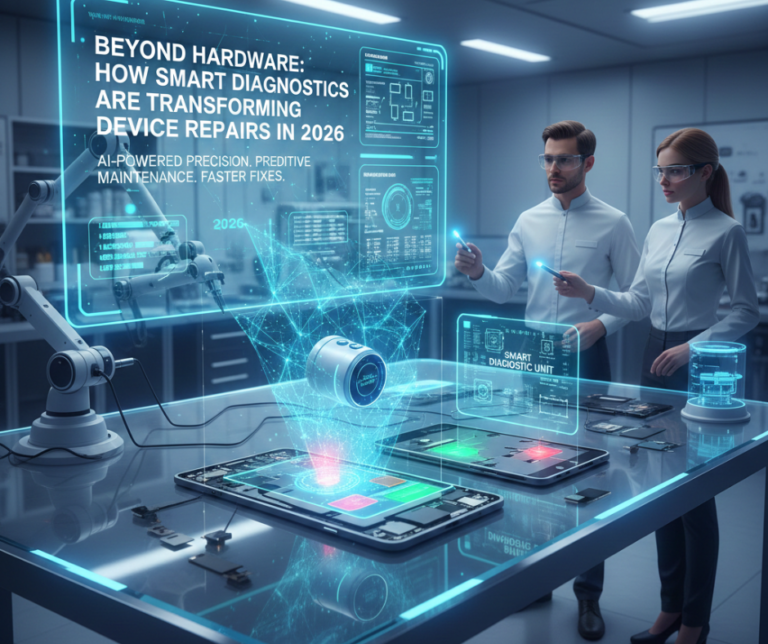
In 2026, the repair landscape is changing faster than ever. Devices aren’t just phones, laptops, or tablets—they’re complex ecosystems powered by AI, 5G connectivity, foldable displays, edge computing, and IoT integration. With such advancements, the old “see a broken part, replace the part” approach is becoming outdated. Today, smart diagnostics are taking center stage, helping […]
Read more

The way devices connect, communicate, and process data has changed dramatically in recent years. By 2026, 5G networks, edge computing, and next-generation connectivity standards have become mainstream across smartphones, laptops, wearables, and IoT devices. While these technologies deliver faster speeds and smarter experiences, they also fundamentally change how devices fail, how issues are diagnosed, and […]
Read more