
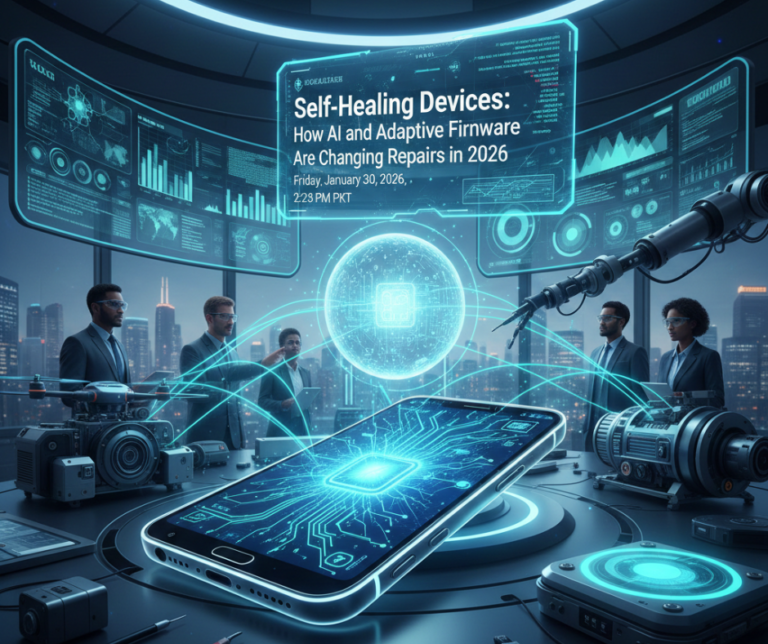
The world of consumer electronics is evolving faster than ever. In 2026, devices are no longer just tools—they’re intelligent systems capable of learning from use, predicting failures, and even repairing themselves. Self-healing devices are emerging as the next frontier, combining AI, adaptive firmware, and modular hardware to reduce downtime and extend lifespans.
This transformation is not just exciting for tech enthusiasts—it’s reshaping how repairs are approached, how technicians work, and what consumers can expect from modern devices.
What Are Self-Healing Devices?
Self-healing devices are electronics that can:
-
Detect faults automatically
-
Apply software patches to fix minor issues
-
Recalibrate sensors and performance parameters
-
Bypass failing components temporarily until professional repair
This approach allows devices to continue functioning even when something starts to fail, reducing sudden breakdowns and avoiding costly repairs.
The Role of AI in Modern Repairs
AI is central to self-healing technology. Devices in 2026 can:
-
Monitor CPU, GPU, and memory usage in real-time
-
Predict battery degradation before it becomes critical
-
Detect sensor drift in cameras or motion modules
-
Adjust network connections and firmware parameters autonomously
For example, a smartphone noticing its battery draining faster than expected can automatically limit background processes, optimize charging cycles, and alert the user before damage occurs.
Adaptive Firmware: Repair Before Failure
Traditional firmware updates often require manual intervention, which can cause issues if applied incorrectly. Adaptive firmware changes that in 2026:
-
Continuously monitors system health
-
Updates small parameters on-the-fly
-
Reverts or isolates problematic modules
-
Communicates with connected devices to ensure compatibility
This reduces the need for emergency repairs, and in many cases, prevents failures entirely.
Implications for Repair Technicians
While self-healing devices reduce physical breakdowns, they don’t eliminate the need for skilled repairs. The role of technicians is evolving:
-
Diagnostics Become Smarter
Instead of looking for broken parts, technicians analyze system logs, AI reports, and firmware adjustments to identify the root cause. -
Firmware & Software Expertise Is Critical
Understanding adaptive firmware is as important as knowing how to replace hardware. -
Data Security Takes Center Stage
Self-healing systems may store sensitive diagnostic data. Repairs must protect privacy while ensuring system integrity.
Benefits for Consumers
Self-healing devices offer several advantages:
-
Reduced downtime: Devices can keep running even when minor issues arise
-
Lower repair costs: Early detection prevents major failures
-
Extended device lifespan: Adaptive maintenance reduces wear and tear
-
Predictive alerts: Users are informed about potential issues before they escalate
Challenges and Limitations
Despite the promise of self-healing devices, there are still limitations:
-
Not all hardware failures can be self-corrected
-
Firmware adjustments may require professional oversight
-
Self-healing systems rely on accurate AI predictions; misinterpretations can cause unnecessary limitations
-
Older devices may not support advanced self-healing features
How Consumers Can Prepare
To benefit from self-healing technology:
-
Keep devices updated with official firmware
-
Use certified accessories to avoid triggering false alerts
-
Regularly review system notifications and AI-recommended actions
-
Partner with trusted repair providers for hardware-level issues
Smart Electronix and the Future of Repairs
At Smart Electronix, we are embracing the new era of self-healing devices. Our approach focuses on:
-
Leveraging AI diagnostics to pinpoint hidden problems
-
Protecting user data during firmware-related repairs
-
Offering professional solutions when adaptive systems detect failures
-
Educating consumers on maximizing device longevity
By combining traditional expertise with insights from smart diagnostics, we ensure repairs are effective, secure, and forward-looking.

Conclusion
The repair landscape in 2026 is shifting from reactive to proactive. Self-healing devices equipped with AI and adaptive firmware are reducing the frequency and severity of failures—but skilled repair services remain essential for hardware and complex software issues.
For consumers, this means fewer surprises, longer-lasting devices, and smarter technology management. For technicians, it’s an exciting opportunity to embrace AI-assisted diagnostics and predictive maintenance, making repairs faster, safer, and more precise.
The future of device repair isn’t just about fixing problems—it’s about preventing them before they happen.