
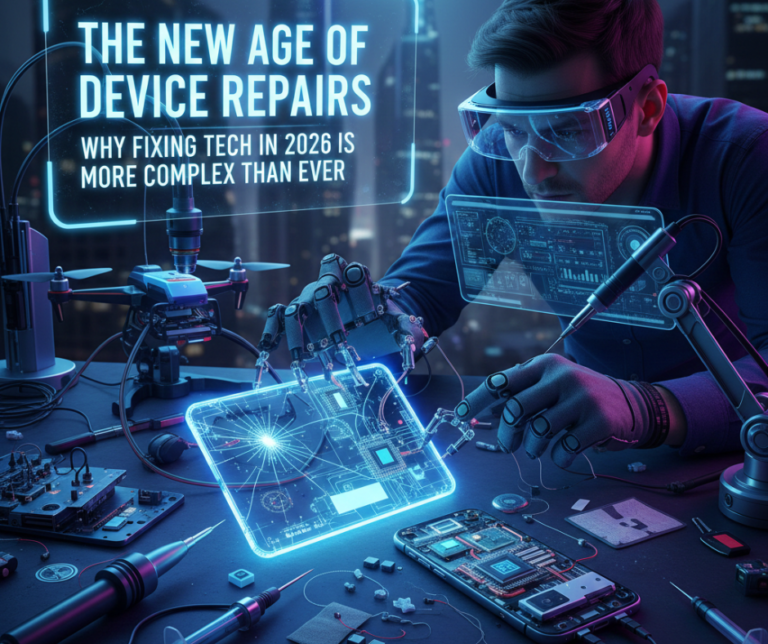
In 2026, repairing a smartphone or laptop is no longer a simple task of swapping broken parts. Modern devices are smarter, thinner, more connected, and more software-driven than ever before. While these advancements bring powerful features and seamless experiences, they also introduce new layers of complexity when something goes wrong.
Today’s device repairs sit at the intersection of hardware, software, connectivity, and data security. Understanding this shift is essential for consumers who want reliable, cost-effective, and long-lasting repairs.
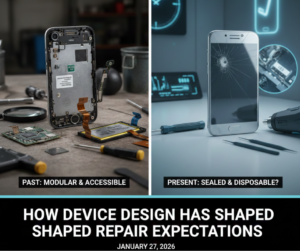
How Device Design Has Changed Repair Expectations
Modern devices are built for:
-
Performance efficiency
-
Compact form factors
-
AI-assisted functionality
-
Always-on connectivity
To achieve this, manufacturers rely on:
-
Integrated components
-
Soldered storage and memory
-
Advanced firmware controls
-
Multi-purpose ports and sensors
While these designs improve usability, they also make devices harder to diagnose and repair without proper expertise.
Why Modern Device Problems Are Harder to Identify
Many issues that appear to be hardware-related are actually caused by software or system conflicts.
Common Examples
-
A laptop overheating due to background AI processes, not a faulty fan
-
A phone losing signal because of firmware mismatch, not antenna damage
-
Battery drain caused by constant connectivity searching, not battery failure
Without proper diagnostics, replacing parts may fail to solve the issue.
Connectivity Has Become a Repair Factor
In 2026, devices constantly communicate with:
-
Cloud services
-
Edge computing nodes
-
Wearables and accessories
-
Vehicles and smart homes
A disruption in this communication can trigger:
-
Performance drops
-
App crashes
-
Battery stress
-
Network instability
Effective troubleshooting now requires understanding how devices behave in connected environments, not just when powered on.
Firmware Updates: A Double-Edged Sword
Firmware updates improve security and performance—but they can also introduce:
-
Compatibility issues
-
Boot loops
-
Feature failures
-
Unexpected power drain
In some cases, devices become partially or fully unusable without any physical damage. Safe recovery requires:
-
Firmware verification
-
Controlled rollback procedures
-
Data-protected repair environments
This makes professional repair services more important than ever.
Why Diagnostic-First Repairs Are the New Standard
Replacing parts without diagnosis is risky in 2026.
Modern repair workflows begin with:
-
System health checks
-
Firmware integrity analysis
-
Power and thermal monitoring
-
Connectivity testing
-
Usage pattern evaluation
This approach:
✔ Prevents unnecessary repairs
✔ Reduces costs
✔ Protects user data
✔ Improves long-term reliability
DIY Maintenance vs Professional Repairs
Basic DIY care still plays an important role:
-
Cleaning vents and ports
-
Monitoring battery health
-
Managing storage
-
Keeping software updated
However, advanced repairs involving:
-
Batteries
-
Motherboards
-
Firmware
-
Foldable displays
-
Sensors and biometrics
should always be handled by trained technicians using professional tools.

The Role of Sustainability in Modern Repairs
With rising device prices and global e-waste concerns, repairability is now a sustainability issue.
Smart repairs help by:
-
Extending device lifespan
-
Reducing unnecessary replacements
-
Supporting reuse of functional components
-
Minimising electronic waste
Choosing repair over replacement—when done correctly—is both economical and environmentally responsible.
What Consumers Should Look for in a Repair Service
Before booking a repair in 2026, ask:
-
Is diagnostic testing performed first?
-
Are repairs explained clearly?
-
Is my data protected?
-
Are genuine or quality-tested parts used?
-
Is sustainability considered?
Transparency is a sign of professionalism.
How Smart Electronix Supports Modern Repair Needs
At Smart Electronix, repairs are approached with a diagnostic-first mindset. Every device is evaluated as a complete system—hardware, software, and connectivity—before any part is replaced.
This ensures:
-
Accurate problem identification
-
Honest repair recommendations
-
Reduced repeat issues
-
Better value for customers
The goal is not just to fix devices—but to restore performance, reliability, and confidence.
Looking Ahead: The Future of Repairs
As devices continue to evolve, repairs will become:
-
More data-driven
-
More software-focused
-
More preventive than reactive
Consumers who understand this shift will make smarter decisions, save money, and keep their devices running longer.
Final Thoughts
Repairing devices in 2026 is no longer about quick fixes—it’s about precision, understanding, and responsibility. With the right approach, modern repairs can be reliable, sustainable, and cost-effective.
Choosing experienced repair professionals and maintaining devices properly ensures technology remains an asset—not a frustration.
Smart repairs start with smart decisions.