

The global technology industry is entering another critical phase in 2026. While the worst of the pandemic-era disruptions may be behind us, chip shortages and supply chain shifts are still reshaping how devices are manufactured, repaired, and priced—especially in Australia.
For consumers, this often shows up as higher repair costs, longer wait times, and limited spare part availability. For repair businesses like Smart Electronix, it means adapting quickly to a constantly changing market.
In this blog, we break down what’s driving the 2026 chip shortage, how supply chain changes affect device repairs, and what Australian consumers can do to manage rising repair costs.
Understanding the 2026 Chip Shortage
Microchips are the backbone of modern electronics. From smartphones and laptops to smartwatches and IoT devices, almost every component relies on semiconductors.
Why the Chip Shortage Is Still a Problem in 2026
Despite increased investment in semiconductor manufacturing, shortages persist due to:
-
Explosive demand for AI-enabled devices
-
Electric vehicle and smart appliance competition for chips
-
Geopolitical trade restrictions
-
Limited fabrication plants (fabs) worldwide
-
Long production cycles (6–12 months per chip batch)
As manufacturers prioritise new devices, spare parts for repairs take a back seat.
How Supply Chain Changes Impact Device Repairs
Supply chains in 2026 are more complex and fragmented than ever before. Instead of relying on a few large suppliers, manufacturers now source parts from multiple regions, increasing variability in cost and availability.
Key Supply Chain Shifts Affecting Repairs
-
Increased reliance on regional suppliers
-
Higher shipping and logistics costs
-
Stricter import compliance and customs checks
-
Limited access to OEM-certified components
-
Reduced production of older model parts
For repair shops, this means sourcing the right part often takes more time and money.
Which Device Repairs Are Most Affected?
1. Smartphone Repairs
Modern smartphones use highly integrated chips for:
-
Power management
-
Camera processing
-
Face recognition
-
5G connectivity
If one chip fails, the entire logic board may need repair or replacement.
Result:
-
Higher motherboard repair costs
-
Increased demand for micro-soldering
-
Limited availability of donor boards
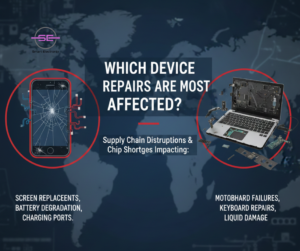
2. Laptop & MacBook Repairs
Laptops are hit particularly hard due to:
-
Custom SSD controllers
-
Unified memory chips
-
Proprietary charging ICs
Apple Silicon devices, in particular, rely on tightly integrated components that are difficult to source individually.
Result:
-
Logic board repairs replacing full assemblies
-
Higher labour costs
-
Longer turnaround times
3. Gaming Consoles & IoT Devices
Gaming consoles and smart home devices compete directly with repair markets for chips.
Result:
-
Delayed part availability
-
Increased use of refurbished components
-
Higher diagnostic costs
Why Repair Costs Are Rising in Australia
Australian repair prices are influenced by both global and local factors.
Cost Drivers in 2026
-
Increased chip prices at the manufacturing level
-
Higher import and freight costs
-
Fluctuating exchange rates
-
Need for advanced diagnostic tools
-
Skilled labour shortages in micro-soldering
Even simple repairs can now involve complex diagnostics due to integrated chip designs.
Repair vs Replacement: A Changing Equation
In the past, replacing a device often seemed cheaper than repairing it. In 2026, that equation is shifting again.
Why Repairs Still Make Sense
-
New device prices are also rising
-
Refurbished repairs cost less than full replacements
-
Data migration and setup add hidden costs
-
Repair supports sustainability and reduces e-waste
Smart Electronix focuses on repair-first strategies to keep costs manageable for customers.

How Smart Electronix Is Adapting to 2026 Challenges
At Smart Electronix, we’ve adjusted our repair strategy to handle ongoing shortages and supply chain changes.
Our Approach
-
Component-level repairs instead of full board replacements
-
Use of refurbished and reclaimed OEM chips
-
Multiple international and local suppliers
-
Advanced AI-powered diagnostics to avoid unnecessary part swaps
-
Stocking high-demand components in advance
These steps help us reduce delays and keep repair costs as fair as possible.
What Consumers Can Do to Reduce Repair Costs
While supply chain issues are largely out of your control, there are steps you can take to minimise expenses.
Practical Tips
-
Repair early before damage spreads
-
Keep devices updated but avoid rushed firmware updates
-
Use protective cases and surge protectors
-
Avoid cheap chargers that damage power ICs
-
Choose repair shops with component-level expertise
Preventive care can save hundreds of dollars in repair costs.
The Role of Right-to-Repair in 2026
Australia’s growing Right-to-Repair movement is helping balance the impact of shortages.
Benefits
-
Improved access to repair documentation
-
Wider availability of spare parts
-
More competition among suppliers
-
Lower long-term repair costs
Smart Electronix strongly supports Right-to-Repair initiatives that protect consumers and independent repairers.
Looking Ahead: What to Expect Beyond 2026
While new chip fabrication plants are being built globally, relief won’t be immediate.
Industry Outlook
-
Continued pressure on spare part availability
-
Increased use of modular and repair-friendly designs
-
Growth of refurbished and circular repair models
-
AI-assisted diagnostics becoming standard
-
Greater transparency in repair pricing
The repair industry will continue evolving—and adaptability will be key.
Final Thoughts
The 2026 chip shortage and ongoing supply chain changes are reshaping device repair costs across Australia. While prices may rise, professional repair remains the smartest and most sustainable option for extending device life.
At Smart Electronix, we’re committed to navigating these challenges with transparency, expertise, and innovative repair solutions—so Australians can keep their devices running longer, smarter, and more affordably.